
One of the key features of DOHSBase is the hierarchical presentation of occupational exposure limit values. In this webinar, we explain how the six hierarchy levels work and why the order of limit values matters.
The families of limit values
The DOHSBase hierarchy is built on the reliability of the underlying limit-value families. From the most reliable, unbiased health-based values at the top to modelling and expert judgment at the bottom — each tier plays its own role across compliance, safe work, and REACH product safety.
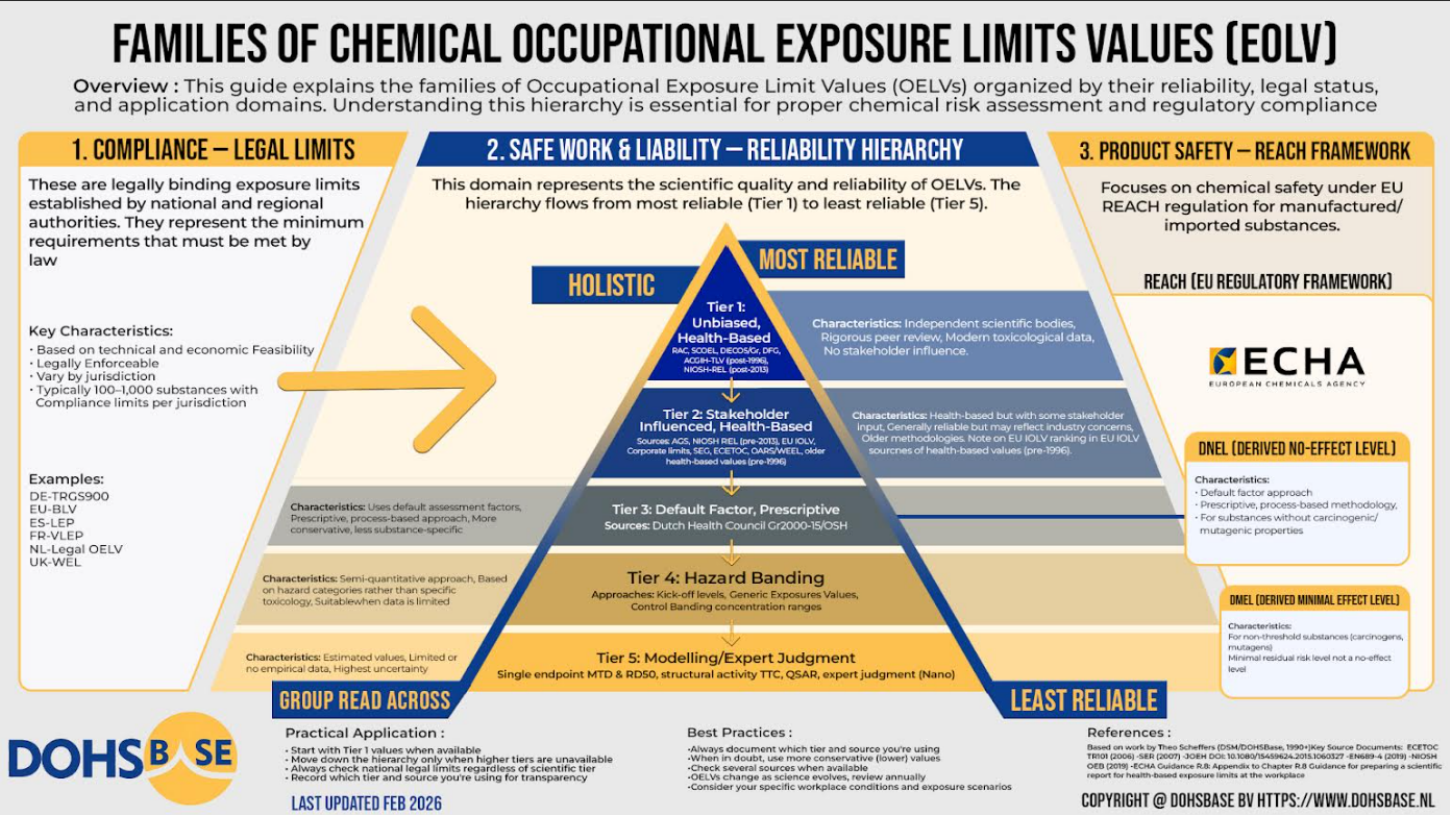
Decision tree for limit values
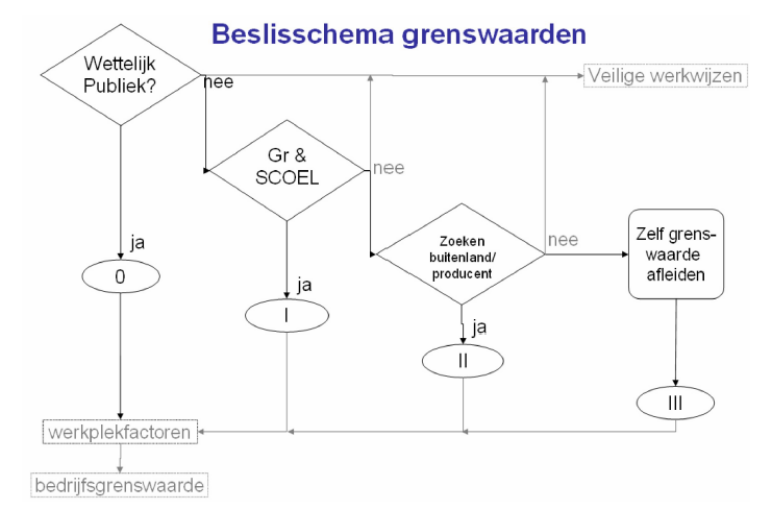
Note: decision tree labels are in Dutch (source material). English translations in the call-out above.
A concrete hierarchy example

The full presentation is available as a PDF download.
Video
The Six Hierarchy Levels
- Legal limit value in your own country
- Health-based limit values without stakeholder influence
- Health-based limit values with possible stakeholder influence
- Limit values calculated with standard factors (including DNELs)
- Limit values based on Hazard Banding systems (including kick-off values)
- Single endpoint and judgment-based values
Read more in our detailed article on the limit values hierarchy.
Try DOHSBase Online
Look up 10 substances for free in our database of 325,000+ chemical substances.
Start Free Trial